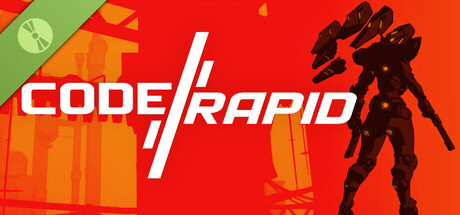
Code RAPID Demo header art
Game InsightsQuality 90Released Jun 30, 2026

Code RAPID Demo

Code RAPID Demo is a fast, third‑person mecha action demo that emphasizes high‑mobility movement, weapon/part customization, and short mission‑based encounters. Player reception is very positive overall, with consistent praise for the movement feel, customization depth, visuals and smooth performance on modest hardware. Common criticisms in the demo focus on the energy/EN recovery system, uneven boss telegraphing and difficulty spikes, lock‑on/tracking oddities, and some controller/input quirks. The demo is recommended for players who enjoy Armored Core‑style mech builds and high‑skill movement; casual players should expect a learning curve and occasional design roughness.

Release Date

Jun 30, 2026

Difficulty

70/100

Learning Curve

Steep, skill and timing heavy

Pace

Fast, bursty combat

Replayability

70/100

Code RAPID Demo Game DNA

Main Skills

High‑mobility movementTiming and perfect dodgesResource (EN) managementMech build tuningTarget tracking and aiming

Emotional Tone

AdrenalineSatisfaction from buildsTension (resource stress)Frustration (boss spikes)

Mechanics

Boost/jump/ground slam mobilityPerfect dodge and riposteLeft/right weapon loadoutsPart‑based mech customizationEnergy (EN) recovery system

What Players Like About Code RAPID Demo

High‑velocity movement and feel

Multiple players describe movement as fast, weighty, and satisfying; boost jumps, wall moves and slam options enable advanced movement tech and acrobatic play.

Deep mech customization

Demo supports multi‑part builds (body, weapons, tuning) and different left/right weapon behavior; players note many viable builds and aesthetic options.

Visuals and performance

Reviewers praise the art style, mech/weapon design and that the demo runs smoothly even on lower settings for many players.

What Players Question In Code RAPID Demo

Energy (EN) and pacing issues

Several players report the EN recovery/system limits aerial or aggressive play and can make combat feel constrained or 'anemic' when energy is low.

Boss telegraphing and difficulty spikes

Multiple reports call out poorly telegraphed boss attacks, tightly timed combos, and mechanics that can lead to long stun or soft‑lock situations during fights.

Lock‑on, tracking and input quirks

Players note janky lock‑on behavior, projectile tracking that feels excessive, and occasional input/latency problems on some controllers or mouse/keyboard setups.

Odd design choices and minor bugs

Examples include taking damage when colliding with walls, a vibration toggle bug, and UI/translation gaps in places—common for a demo state.

Who Code RAPID Demo Is For

  • Fans of Armored Core and fast mech action games
  • Players who enjoy deep build customization and tuning
  • Players who like high‑skill movement tech and speedruns
  • Those comfortable with challenging combat and trial‑and‑error

Who Should Wait On Code RAPID Demo

  • Players who prefer forgiving, slow‑paced combat
  • Players expecting a polished, bug‑free full release (this is a demo)
  • Users who require flawless controller support or legacy controller compatibility

Games Similar To Code RAPID Demo

Armored Core (series)

Multiple player reviews explicitly compare Code RAPID Demo's movement, build focus and difficulty curve to Armored Core (AC6 and other entries).

Confidence 85/100

Daemon X Machina

Several reviewers reference Daemon X Machina when discussing pacing, aesthetic or mechanical similarities in high‑mobility mech combat.

Confidence 65/100

Code RAPID Demo FAQ

Is Code RAPID Demo worth playing now?

If you enjoy fast, high‑mobility mech action and tinkering with part‑based builds, the demo is worth trying: player sentiment is very positive overall, but expect a demo‑level roughness — challenging bosses, EN management that affects pacing, and some control quirks.

What kind of gameplay and setting does Code RAPID Demo offer?

Code RAPID Demo is a third‑person, mission‑based mecha action demo set on the planet Ondarea. It focuses on acrobatic combat (boosts, wall moves, slams), weapon ripostes after perfect dodges, and deep part/weapon customization.

How long are play sessions in the demo and what should I expect?

The demo is short and mission‑focused; players report brief sessions per mission and replayability driven by build variety and secret exploration rather than long campaign runs.

How difficult is Code RAPID Demo to learn and master?

Learning curve is steep: timing, movement tech and EN management matter. Many reviewers describe a skill‑and‑timing heavy experience with notable difficulty spikes around certain bosses.

Should I use a controller or mouse and keyboard?

The store page recommends a gamepad and several players report the best experience on controller; however others play it with mouse/keyboard — some users did report controller detection or input latency issues on certain setups.

Are there technical issues or bugs I should know about?

As a demo, players have reported some bugs and oddities: vibration toggle problems, occasional input latency on certain setups, wall collision damaging the player, and some UI/translation gaps. Many also note that performance is generally smooth on a range of systems.

Is there evidence of ongoing updates or long‑term roadmap in the bundle?

The provided bundle does not include an official update roadmap or patch notes. Reviews reference crowdfunding interest and developer activity, but a confirmed long‑term support plan is not present in the evidence.

More Game Insights

Compare Code RAPID Demo With Other Games

Browse all insights
Rubinite header art

Rubinite

Rubinite is a boss-rush action RPG built around reading enemy weaknesses and landing lethal strikes. Evidence points to tight, fluid combat, strong pixel art, and a short run time that many players finish in about 6-12 hours depending on skill. Reviews are very positive overall, but repeated complaints mention difficulty spikes, a few frustrating boss designs or hitbox issues, and limited content. It looks worth playing now if you want focused boss fights and challenging timing-based combat rather than a long story-heavy adventure.

DreamEcho header art

DreamEcho

DreamEcho is a top-down roguelite ARPG for players who enjoy loot grinding, build crafting, and short repeat runs. The store page emphasizes free-form concept combinations, meta-progression through memories, and future updates, while player reviews mostly praise the build variety, combat feel, and satisfying grind loop. The main cautions are uneven balance, weak onboarding, and some rough edges in crafting, interface clarity, and optimization. It looks worth playing now if you want a compact POE-like roguelite with strong build tinkering and can tolerate early-access-style unevenness.

Echoes of Mystralia header art

Echoes of Mystralia

Echoes of Mystralia is a spellcrafting roguelite action-RPG built for players who enjoy build experimentation, run-based progression, and strong presentation. The store page emphasizes fast combat, deep customization, and a world rooted in memory and loss, while player reviews describe a polished early-access release with standout art, music, voice acting, and a combat system that rewards creative spell combinations. The main tradeoff is balance: many players find it easier than heavier roguelites, while others call out punishing damage, limited healing, visual clutter, and early-access bugs. It looks most appealing for fans of Hades-style runs who want a more flexible magic-build focus and can tolerate rough edges while the game is still developing.

Featured Game Insights

Featured games worth checking next

Browse all insights
Carpet Cleaning Simulator header art

Featured

Carpet Cleaning Simulator

Carpet Cleaning Simulator is an incremental cleaning game where you scrub, foam, rinse, and squeegee carpets for money, investing in upgrades to speed up each run. A meteor-triggered time reset sends you back with persistent boosts, creating a satisfying loop of growth and optimization. Player reviews describe a fun, cozy experience with clear progression and a short runtime, while some note limited depth and occasional issues. It’s available on Windows and Mac with full controller support, and has received a post-launch update that adjusted progression and fixed UI problems.

Cat Chess header art

Featured

Cat Chess

Cat Chess is a whimsical, cat-themed take on classic chess that targets casual players and cat lovers. The core is straightforward chess play with animated cat-piece captures, quick matches, local split-screen, and online PvP. Players praise the charm and animations but report launch-day bugs, inconsistent AI strength, missing or rough online features (matchmaking, timers), and some UI/UX roughness. Best suited for casual or family play; competitive players seeking robust rated matchmaking or flawless rule implementation may find limitations at launch.

Chrono CCG header art

Featured

Chrono CCG

Chrono CCG is an indie, timeline-focused digital card game that combines familiar turn-based CCG flow with unique systems such as Timeline shifts and unit Immortalization. The store page and many player reports show solid core design and strategic depth—particularly for players who liked Legends of Runeterra—but the open beta launch is rough: numerous players report UI bugs, matchmaking hiccups, missing tutorial/onboarding, and complaints about monetization and store prices. The developer communicates a competitive roadmap and has already issued maintenance fixes; expect frequent balance patches and iterative improvements, but plan to play as an early-access tester rather than a finished product.

Built from store details, player reviews, and update notes for Code RAPID Demo. Generated from available Steam data and review signals. Last generated: 7/4/2026.