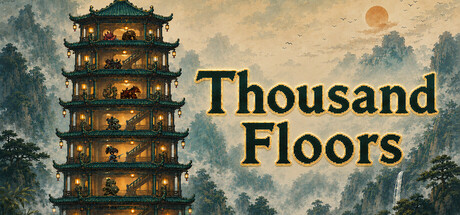
Thousand Floors header art
Game InsightsQuality 100

Thousand Floors

Thousand Floors is a Chinese‑inspired pixel idle tower-climber that mixes tap-to-spawn collision combat with automated allies, relic progression, and a rebirth loop. The game leans into relaxed, slow-paced progression with offline earnings, a relic codex that permanently stacks bonuses, and a lockdown/summon spatial strategy. Player impressions are mixed: many reviewers call it a pleasant, low-effort idle experience suited for background play, while others criticize repetitiveness, slow combat speed, low drop/key rates, and some UI/bug issues. The developer has issued multiple hotfixes and bug fixes shortly after release, indicating active post-launch support.

Difficulty

25/100

Learning Curve

Easy to pick up

Pace

Slow, idle progression

Replayability

55/100

Thousand Floors Game DNA

Main Skills

resource managementupgrade planningtiming summoning

Emotional Tone

RelaxedZenRepetitive

Mechanics

idle progressionsummon-and-auto-combatrelic-based permanent upgradesrebirth/run resets

What Players Like About Thousand Floors

Relaxed idle loop

Thousand Floors emphasizes idle income, automated allies, and offline gold so players can progress while AFK or during light multitasking.

Eastern pixel presentation

The game highlights crisp, Chinese‑inspired pixel art and motifs drawn from the Classic of Mountains and Seas that many reviewers found appealing.

Multiple progression lines

Progression includes summon upgrades, mystic arts, relics that permanently stack, and a rebirth/Wish‑Lamp loop for iterative growth.

Developer responsiveness

Several hotfixes and updates were released immediately after launch to address bugs and tweak features, and reviewers noted ongoing optimization.

What Players Question In Thousand Floors

Repetition and thin late-game content

Multiple reviews report content becomes scarce once automation kicks in; players describe the loop as repetitive and slow to introduce new systems.

Slow combat pacing and missing speed controls

Players repeatedly request an acceleration option; combat and climb speed are described as sluggish without a fast-forward feature.

UI and drop-rate frustrations

Reviews call out inventory/ui clarity issues, scarce key drops for chests, and unclear tutorials explaining mechanics like key acquisition or equipment.

Mixed player sentiment at launch

Steam reviews are mixed: some praise the idle experience and market system, others call the early build buggy or unsatisfying for the price.

Who Thousand Floors Is For

  • Casual players who want a low‑effort idle experience
  • Fans of Chinese/Eastern pixel art and themed progression
  • Players who like background play and intermittent interaction
  • Those interested in rebirth/incremental upgrade loops

Who Should Wait On Thousand Floors

  • Players seeking deep, active combat or fast‑paced gameplay
  • Those who expect extensive tutorial guidance or immediate polish
  • Players who dislike repetitive grind or low drop rates

Games Similar To Thousand Floors

Clicker Heroes (点击英雄)

Both are incremental/idle clicker-style games with tap-to-progress early loops and automated scaling later, mentioned by reviewers as alternatives.

Confidence 70/100

勇者之塔

At least one reviewer explicitly compared Thousand Floors to 勇者之塔, noting similarities in tower-climb and idle aspects.

Confidence 60/100

Recent Thousand Floors Updates

HOTFIX 1.0.26.0

2026-06-18

Revised inventory magic treasure descriptions and resolved known bugs.

1.0.24

2026-06-18

Resolved existing known bugs concerning Steam leaderboards and configuration settings.

HOTFIX 21:39

2026-06-18

Updated frame rate limit and auto-battle functions.

Thousand Floors FAQ

Is Thousand Floors worth playing now?

That depends on your expectations: if you want a relaxed, background idle tower-climber with Eastern pixel art and offline earnings, many players find it suitable; if you want fast-paced or deeply varied active gameplay, reviews note repetition, slow pace, and some launch shortcomings.

What is the core loop of Thousand Floors?

Summon Tower Climbers by tapping a floor, watch automated allies fight and climb, earn gold and chests, upgrade summons and mystic arts, collect relics that permanently stack, then use Rebirth to start a stronger run.

Can I make progress while away from the game?

Yes — the store description and multiple player reports confirm offline gold and idle progression that continues when you’re not actively playing.

Are there known bugs or missing features?

At launch players reported UI issues, inventory confusion, and occasional bugs; the developer pushed several hotfixes addressing inventory descriptions, framerate/auto-battle, and leaderboards shortly after release.

Does Thousand Floors support item trading or a market?

Yes — multiple reviews note that in-game drops can be listed on the Steam market and that marketplace functionality was restored and actively used by players.

Is Thousand Floors suitable for short sessions or multitasking?

Yes — reviewers consistently recommend it as a background/multitask title for short check-ins; the gameplay is deliberately idle and forgiving for intermittent play.

Is Thousand Floors beginner friendly?

Thousand Floors looks more approachable than mastery-heavy games, though the confidence depends on review volume.

More Game Insights

Compare Thousand Floors With Other Games

Browse all insights
Antivirus Girl header art

Antivirus Girl

Antivirus Girl is a hybrid tower defense and top-down shooter where you place modules, shape enemy routes and personally inspect or destroy incoming files to protect a client system. The game pairs cute character art with tactical tower placement and run‑and‑gun action, plus boss minigames and escort/scan mechanics. Player reports note roughly 24 stages at launch, generally positive reception, but also recurring difficulty spikes, a few bugs and some non‑TD action segments that divide opinion. The developer has acknowledged launch and invited bug reports; additional modes were signalled for later quarters.

How To Grow a Black Hole header art

How To Grow a Black Hole

How To Grow a Black Hole is a chill incremental clicker about feeding, upgrading, and stabilizing a growing black hole. The store page frames it as light, not-academic fun with research trees, leaderboards and bite-sized facts. Player reviews are Mostly Positive: many praise the visuals, satisfying progression, and developer responsiveness, while a number report performance or launch issues and some find late-game balance or UI clunky. The developer has issued quick hotfixes and a quality-of-life update (offline simulation, leaderboards, UI and performance tweaks), so the game is actively being refined. Good fit for clicker/idle fans who want a short-session, numbers-driven experience with occasional strategic tension; less suited to players seeking strict astrophysics or highly polished, bug-free releases right at launch.

Relief header art

Relief

Relief is a post–Journey to the West–inspired roguelike deckbuilder that combines over 1,000 cards and 300 artifacts with a 14-day town/expedition cycle. Runs focus on deckbuilding, card affixes from shrines, and choosing powerful mid-run boons that steer builds. Player reviews describe it as highly replayable, broadly forgiving for newcomers, and rich in build variety, though several reviews flagged rough UI and occasional bugs; an update has already fixed a critical UI freeze reported after Story Mode runs. If you like experimentation, big combo potential, and a Chinese folklore / urban-myth tone, Relief is a solid match; expect some polish work to continue post-launch.

Featured Game Insights

Featured games worth checking next

Browse all insights
Tales of Seikyu header art

Featured

Tales of Seikyu

Tales of Seikyu is a cozy farming life sim set on a quiet island of yokai where you grow crops, craft, build relationships, and shapeshift into spirit forms to explore. The 1.0 release added content and polish that many players praise—art, characters, and the shapeshifting twist—while some report performance hitches, clunky controls, and light-feeling combat. Suited to players who enjoy relaxed, exploration-driven sims with social systems and gentle RPG elements.

Tokyo Valkyries header art

Featured

Tokyo Valkyries

Tokyo Valkyries is a roguelite deckbuilder that pairs turn-based card combat with light fanservice and a three-character party system. Players assemble decks around four Attributes (Resolve, Courage, Hope, Dawn) and navigate map nodes to fight, shop, and trigger events; ritual "sword-pulling" mini-scenes are mandatory and grant permanent upgrades. Reviews praise the character art, voice work, and accessible run length (single-story clear in roughly 7–12 hours), while many players note uneven card balance, a small card pool, and limited post-game. Recommend Tokyo Valkyries for players who enjoy anime-flavored deckbuilders and short, replayable runs; less suited for those seeking deep balance or extensive endgame content.

Urban Strife header art

Featured

Urban Strife

Urban Strife is a turn-based tactical survival RPG that combines precise ballistic simulation, squad tactics and base survival. The game suits players who enjoy methodical, old-school tactical combat and resource management; reviews are Mostly Positive and praise depth, faction choices and combat systems, while common complaints cite UI polish, occasional bugs and balance/AI issues. The game exited Early Access with a 1.0 release on July 14, 2026 and has received hotfixes for localization and UI text overflow.

Built from store details, player reviews, and update notes for Thousand Floors. Generated from available Steam data and review signals. Last generated: 6/18/2026.